
Getting around Education City can feel intimidating at first. The campus is vast, spread across universities, hospitals, cultural venues, and residential areas. Walking long distances isn’t always practical, and driving between buildings often involves parking and navigating internal traffic. That’s exactly why the Education City Tram exists.
Designed as a free, easy-to-use public transport system, the tram helps students, staff, visitors, and families move comfortably across Education City without a car. Whether you’re heading to class, attending an event, visiting a museum, or going to an appointment, the tram makes daily movement simple and stress-free.

What is the Education City Tram?
The Education City Tram is an internal tram network built to connect the many districts that make up Education City. Instead of functioning like a citywide metro, it focuses on short, frequent trips within the campus.
The network consists of modern, air-conditioned trams running on dedicated tracks, with clearly marked stations close to key destinations. Trams are designed to be accessible for everyone, including people with mobility needs, parents with strollers, and visitors unfamiliar with the area.
At its core, the tram supports Education City’s wider goals of sustainability, accessibility, and reduced car dependency.
Operating schedule and service hours
The Education City Tram runs daily, with slightly shorter hours on weekends. While exact timings can change during holidays or major events, the general operating pattern is consistent.
Typical service hours are:
- Saturday to Wednesday: 6:00 AM to 10:00 PM
- Thursday and Friday: 6:00 AM to 4:00 PM
Morning services support students and staff arriving early, while daytime hours work well for visitors and appointments. Since evening services are limited on some days, it’s worth planning your return trip in advance if you’re staying late.
Fees and ticketing
One of the biggest advantages of the Education City Tram is its ease of use. There are no fares to worry about, no tickets to buy, and no travel cards to top up. You don’t need to register or make a reservation, just wait at the platform and board when the tram arrives.
This simplicity makes the tram especially welcoming for visitors, students, and first-time users who may not be familiar with Qatar’s transport systems.
A few basic rules help keep the service safe and comfortable for everyone:
- Children under 12 must be accompanied by an adult
- Priority seating should be given to those who need it
- Passengers are expected to follow safety signs and onboard announcements
Once you’ve taken the tram a few times, the process feels intuitive and stress-free.
Tram lines, stations, and destinations
The network includes three colour-coded lines serving 24 stations across Education City. Each line serves a different part of the campus, making it easy to choose the right route once you’re familiar with the layout.
- The Yellow Line is the main spine of the network. It connects major public spaces, car parks, and shared facilities, making it the most commonly used line for general movement.
- The Blue Line primarily serves academic and campus zones. It’s especially useful for students and staff travelling between lecture halls, administrative buildings, and nearby facilities.
- The Green Line connects major destinations, including hospitals, hotels, event venues, and community housing. Visitors attending conferences or medical appointments often rely on this line.
Stations are clearly marked, and route maps are displayed at platforms and inside trams.
Metro connections and park-and-ride options
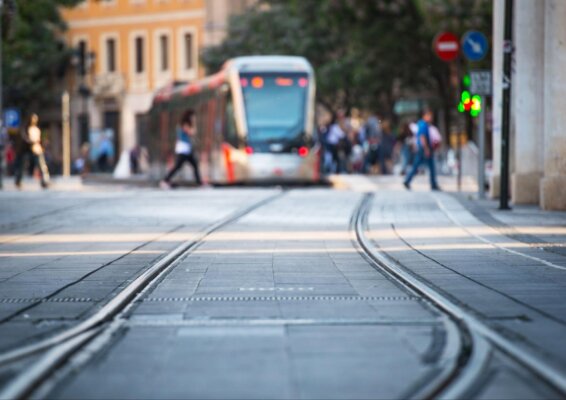
The Education City Tram is designed to complement other transport options, making it easier to move around the campus without relying entirely on a car. Whether you’re arriving by metro or driving in from elsewhere, the tram makes the final leg of the journey easier.
- Doha Metro connection
Passengers can connect directly to the Doha Metro Green Line at Education City Station. This link provides a smooth connection between Education City and other parts of Doha, eliminating the need to drive or arrange separate transport once you arrive.
- Park-and-ride convenience
Several tram stops are positioned next to major car parks across Education City. Visitors can park once and use the tram to move between campuses, facilities, and attractions, helping reduce internal traffic and keeping pedestrian areas calmer and safer.
On-board comfort, rules, and accessibility
Trams are modern, quiet, and fully air-conditioned. Level boarding makes entry easy for wheelchair users, people with mobility challenges, and parents with strollers.
What you can bring on board:
- Strollers and pushchairs
- Folding bicycles
- Small pets in secure carriers
On-board etiquette:
- Eating and drinking are not allowed
- Passengers should let others exit before boarding
- Pedestrian crossings and safety signals must be followed
These rules help keep journeys calm, clean, and comfortable.
Tram frequency and waiting times
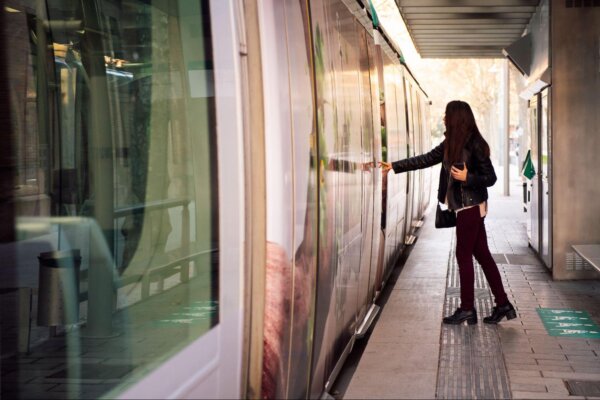
Tram frequency across Education City varies by line and time of day. During busy periods, such as morning commutes and lunchtime hours, trams arrive more frequently to handle higher demand. In quieter periods and on weekends, waiting times can be a little longer, particularly on the Green Line.
If you’re connecting to the Doha Metro or heading to a class, meeting, or appointment, arriving a few minutes early gives you a buffer and helps you avoid unnecessary stress if the next tram isn’t immediate.
Best Times to Use the Education City Tram
While the Education City Tram runs reliably throughout the day, the experience can vary depending on the time and season. Knowing when demand is highest helps you plan a smoother trip, especially if you’re connecting to the Metro or attending a scheduled appointment.
In general:
- Early mornings are quieter and ideal for staff, patients, and early classes
- Midday hours can be busier due to student movement and lunch breaks
- Late afternoons often see increased demand during semesters
- Evenings are calmer outside of major events or exam periods
On weekends, services are slightly reduced, particularly on the Green Line, so allowing extra waiting time is a good idea if you’re on a tight schedule.
Who Uses the Education City Tram Most?
The Education City Tram serves a wide mix of people throughout the day, which is why it stays busy beyond standard commuter hours. It’s not designed for one group alone, but for anyone moving across the campus comfortably and efficiently.
You’ll commonly see:
- University students travelling between campuses, libraries, and shared facilities
- Faculty and staff commuting internally without needing a car
- Hospital visitors and employees heading to Sidra Medicine
- Event attendees going to QNCC, Education City Stadium, or cultural venues
- Families and visitors exploring parks, museums, and public spaces
This diverse mix keeps the tram active from early morning through the evening, especially during academic semesters and major events.
How the tram fits into daily life at Education City
The tram isn’t just for commuting. It’s part of how Education City functions day to day.
Students use it to travel between lectures, libraries, and shared facilities. Staff rely on it to move between meetings without worrying about parking. Visitors use it to reach museums, hospitals, conference venues, and public spaces without needing directions or a car.
Because stops are close together and services are frequent, most journeys take only a few minutes. This makes the tram ideal for short hops throughout the day rather than long, planned trips.
Practical tips for first-time riders
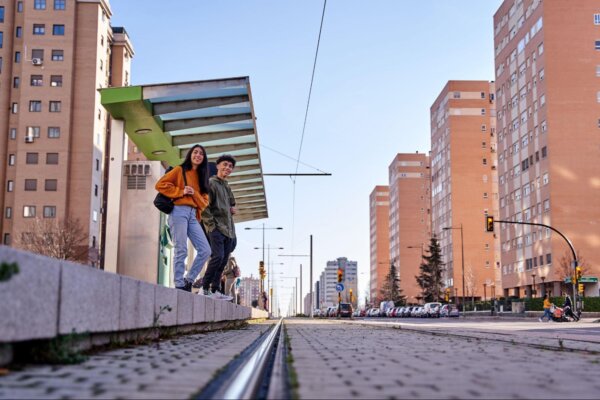
If you’re new to the Education City Tram, a little preparation helps you move around more confidently, especially given the size of Education City and the number of campuses and facilities spread across it.
- Check which tram line serves your destination before boarding
- Avoid leaving trips too late on Thursdays and Fridays when services wind down earlier
- Expect busier trams during exam periods, conferences, and major campus events
- Use platform maps and digital screens to plan multi-stop journeys
Once you’ve used the tram a few times, routes and stations quickly become familiar, making everyday travel around Education City feel effortless rather than planned.
Why the Education City Tram matters
The tram is more than a transport service. It shapes how people experience Education City.
Reducing car use, it supports a quieter, safer, and more walkable environment. It encourages people to move freely between spaces, students attending events, visitors exploring museums, and families enjoying public areas, without the friction of traffic and parking.
This kind of everyday mobility helps turn a large campus into a connected community rather than a collection of isolated buildings.
Key takeaways
The Education City Tram is a free, accessible transport system designed to simplify movement across one of Qatar’s largest educational hubs. With three clearly marked lines, frequent service, and direct Metro connections, it supports students, staff, visitors, and families alike. Its ease of use, comfort, and integration with parking and metro services make it a practical alternative to driving within Education City.
FAQs
Is the Education City Tram free?
Yes. No tickets, fares, or passes are required.
Can visitors use the tram, or is it only for students?
Anyone can use it, including visitors and families.
Does the tram operate on weekends?
Yes, but with shorter hours and reduced frequency on some lines.
Is it accessible for people with mobility needs?
Yes. Trams and stations are fully accessible.
Can I bring a stroller or a folding bike?
Yes, as long as it’s handled safely on board.